
Environmental Protectionism
Environmental protectionism in Taiwan isn’t just a personal virtue; it’s built into systems. But my 早餐 fieldwork showed something more interesting than “Taiwan is green”: it showed how environmental goals get negotiated inside daily routines designed for speed, hygiene, and volume. What looks sustainable in one moment can shift costs elsewhere (water, labour, materials, safety).
Policy Snapshot (Why the “green” question is on the table)
-
Onsite dining disposables have been restricted across regulated venue categories over time; Taiwan has repeatedly tightened controls.
-
Single-use plastic straws were restricted starting July 1, 2019 in targeted onsite dining contexts.
-
Chains must offer NT$5 minimum off for customers who bring reusable cups (since July 1, 2022).
-
Chains are also required to provide reusable cup rental in a portion of stores (starting 2023, scaling up).
Policy Snapshot
Field Evidence
At first glance, Taiwan’s environmental mindset appears through routine norms: clean streets, self-bussing, recycling systems, and reusable tools that reduce waste in small ways.
-
In multiple 早餐店, customers cleared trays and sorted waste themselves. That looks like “efficiency,” but it’s also environmental governance at the micro level: it reduces labour burden and keeps the space functional at high volume. The policy direction supports this kind of habit-building (source reduction + recycling), but the key point is that customers are made part of the system.
-
I walked for over an hour holding an empty cup because public trash cans were hard to find, yet the city stayed remarkably clean. This wasn’t only about individual discipline; it suggested shared norms and infrastructure working together. The effect is “low-litter,” but the experience also raises questions: where does waste go, and who is responsible for the inconvenience, citizens, businesses, or the city?


More Field Evidence
At first glance, Taiwan’s environmental mindset appears through routine norms: clean streets, self-bussing, recycling systems, and reusable tools that reduce waste in small ways.
-
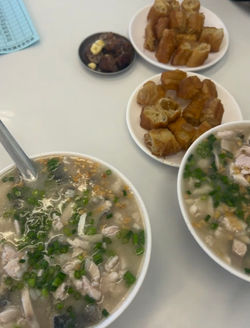
At one 早餐 spot, solid foods were served on reusable plates covered with thin plastic liners. It may reduce dishwashing time and reassure customers about cleanliness, but it also normalises single-use material in a routine meal. Rather than calling it “anti-environmental,” I read it as a pressure point: the shop is optimising for labour and hygiene under morning rush conditions, even if that shifts cost to waste.
-
Taiwan doesn’t rely only on moral messaging; policy nudges show up as everyday retail design (discount signs, reusable cup systems, straw restrictions). My question became less “Is Taiwan green?” and more “How do systems train behaviour through convenience?”
 |  |  |  |
|---|---|---|---|
 |  |  |  |
 |  |  |  |
 |  |  |  |
 |  |

The Complexities
A Complexity Ladder (Why this isn’t black-and-white)
-
Visible wins: self-bussing, reuse, sorting norms, and reduced reliance on “throw-away convenience.”
-
Hidden tradeoffs: speed and hygiene sometimes reintroduce disposables (liners, wrappers, grab-and-go packaging).
-
System pressures: small staffs, morning rush, space constraints, and customer expectations shape what “sustainable” can look like in practice.
-
Open questions I can’t answer from observation alone: Which practice has the lower footprint overall, washing (water/energy/detergent) or single-use liners (materials/waste)? And how do health/safety perceptions push businesses toward certain choices?
Mini Takeaway
If Taiwanese 早餐 is a system designed to keep mornings moving, then environmental protectionism shows up less as a perfect “green identity” and more as a constant negotiation between convenience, cleanliness, labour, and waste. My fieldwork suggests Taiwan’s environmental identity isn’t defined by one solution, but by how everyday systems distribute responsibility across government, businesses, and customers.
“What I’m choosing not to conclude (yet)”
My evidence shows design tradeoffs, not total environmental impact. I can describe what I saw (materials, routines, signage), but I can’t compute lifecycle outcomes from observation alone. So I’m treating these moments as clues about values and pressures, not final proof.