The Disruption
Encounters That Rewrote my Inquiry
The first shift in my inquiry didn’t come from a reading, it came from realizing I was misreading what I was seeing.
The moments that changed my inquiry weren't dramatic, they were ordinary.
The encounters that challenged me most revealed how strongly I was carrying my own assumptions into Taiwan. What surprised me is that Taipei and Tainan challenged me in opposite ways. Taipei forced me to stop equating “authentic” with “slow and communal.” Tainan then forced me to stop equating “efficiency” with “fast and impersonal.” Together, they showed me that urban Taiwan’s 早餐 culture isn’t one single model; it’s a spectrum shaped by place, pace, and social expectations.
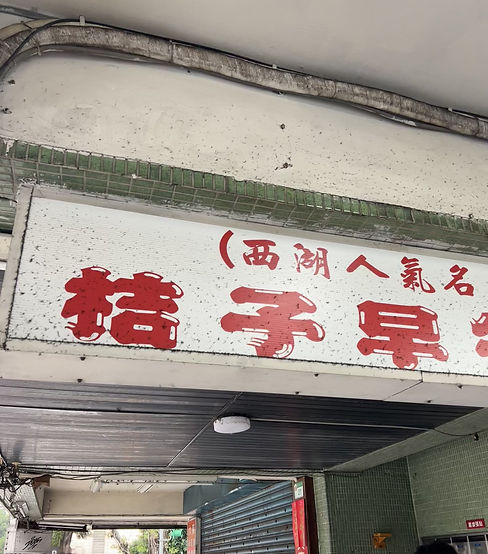
The Helmeted 男人: 早餐 as a bridge, not as destination
I kept searching for what Taiwan wasn't...
Early in the trip, I interviewed a Taiwanese local while we were waiting in line (with help translating from Jin, Temi, and Oliver). He was still wearing his helmet, which immediately signalled what 早餐 meant in that space: not a sit-down ritual, but a quick stop inside a tightly scheduled morning. He told us he rarely eats 早餐 at home and often eats it at the office, because he doesn’t have much time.
That answer challenged a cultural ideal I didn’t realise I was treating as universal: 早餐 as a grounding family moment, something that gathers people before the day begins. In Taipei, 早餐 felt less like a domestic ritual and more like urban infrastructure, a dependable system that feeds large numbers of people quickly so the rest of the day can run.
The uncomfortable part was recognising my bias underneath it: I had been quietly ranking cultures, treating my version of breakfast as the “better” one. That bias wasn’t just unfair; it was limiting what I could actually learn.
The Source Wake-Up Call
My authentic Taiwan was being produced by filters
A second moment sharpened this even further when another local looked at my curated list of 早餐店 and said, “No, no, no. Aya! These are not local places.” That comment challenged my research habits more than my taste preferences. It made me question how my idea of “authentic Taiwan” was being produced through external filters, TikTok, Google Map Reviews, and visibility, rather than through everyday patterns.
After that, even when I still went to popular places, I changed what I paid attention to. I started observing systems instead of just dishes: how menus are designed to move people, how ordering channels reduce confusion, how labor is divided, and how customers participate in keeping the space functional.
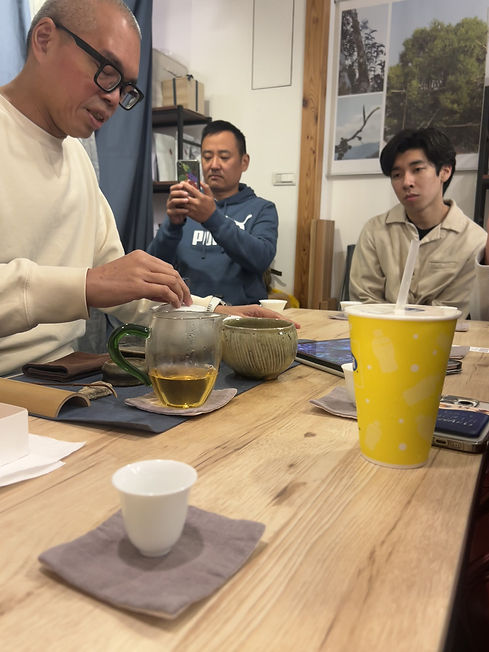

The Missing Trash Cans(Yet the Cleanest City Ever?!)
No trash cans. Still spotless. Why?
I noticed something that didn’t make sense to me at first: Taiwan had fewer public trash cans than I expected, yet it was one of the cleanest places I’ve ever been. One day, I walked around with an empty boba cup in my hand for over an hour, genuinely trying to do the “right thing”; find a trash can and throw it away properly. But I couldn’t. I kept carrying it, waiting to stumble across a bin that never appeared.
That inconvenience became a question. If trash cans aren’t everywhere, then cleanliness can’t depend on infrastructure alone; it has to depend on behaviour, shared norms, and an assumption that people will hold responsibility for their own waste until they find the right place to dispose of it. In other words, the city’s cleanliness felt like a form of community discipline: less “someone will clean up after me,” more “I am part of keeping this place functional.”
Then I started seeing the connection to 早餐. 早餐 in Taiwan often moves in a grab-and-go (即拿即走) rhythm: fast ordering, quick turnover, portable foods, drinks in cups, wrappers, and packaging that make the system work for people commuting. That efficiency is real, and it’s culturally meaningful. But it also adds nuance to Taiwan’s environmental identity: convenience can create more disposable waste even as the culture expects individuals to manage that waste responsibly.
So the question became more complicated than “Is Taiwan environmentally conscious?” It became: how does Taiwan balance speed and convenience with responsibility and cleanliness, and what are the tradeoffs?
Tainan: Community You Can Feel (Hospitality As a System)
Warmth and community within an efficiency system
Tainan complicated my thinking in the best way. After Taipei, I had started reading about 早餐 culture through systems, flow, efficiency, and routines that keep the city moving. Then Tainan made me notice something else: community isn’t only something you see in families eating together. It can also show up as strangers helping strangers succeed inside a shared space. Even visually, the rhythm felt different; Taipei mornings often read as white-tile efficiency: clean, bright, quick, built for flow. Tainan felt more colourful and textured, as if the space itself invited you to slow down and notice people.
One day, we weren’t even following a strict plan. We were walking toward a market, saw a busy restaurant, and stopped because it clearly looked like a place locals actually eat. That choice shifted my lens from “destination-based tourism” to “pattern-based observation”: instead of chasing the famous, I started paying attention to where daily life was already happening, and how people treated one another inside it.


Toast Toast: Hospitality as Guidance
At Toast Toast, the shopkeeper didn’t just hand us a 菜单 and disappear. He literally walked us to the table (桌子旁), came back to make sure we were ordering correctly, and when I returned to place the order, he cross-checked every item with me. In my home logic, that kind of attention reads as warmth, and it was. But analytically, it was also a form of community-building: he was taking responsibility for making sure we didn’t feel lost inside the system.
That moment made me realize something important: in Tainan, hospitality wasn’t an “extra” layer added on top of service. It felt woven into the routine; a practical kind of care that helps the whole place function smoothly, especially when someone (like me) doesn’t speak the language fluently

馄饨汤,卤肉饭
Bao An Rice Cake: Care Under Pressure
That same logic showed up again at Bao An Road Rice Cake. The restaurant was family-owned, and one woman was running the kitchen, the counter, and serving. We were trying to Google-translate the menu, and she brought an English menu without us even asking. Even while multitasking, she still took the time to explain and confirm that we understood what we were ordering. The care wasn’t sentimental; it was deliberate. She helped prevent mistakes, reduced confusion, and made the interaction workable for everyone.
These two moments reshaped how I understood community in Taiwanese breakfast culture. In Taipei, community often appeared through shared norms; everyone moving through the same queue logic, self-bussing, keeping the flow. In Tainan, community appeared more directly through relational hospitality: shopkeepers taking responsibility for helping you succeed inside the system. It challenged my bias that efficiency has to be impersonal. Tainan showed me that a system can be efficient because it is human; because it reduces error through guidance, and it builds trust through care.

Now What?
Realigning my perspectives
Taiwan’s urban 早餐 systems reveal identity beyond taste, through how people organise time, space, labour, and care. Comparing Taipei and Tainan shows three values in action: efficiency and creativity, hospitality and community, and environmental responsibility.
Identifying Core Ideas

1
Efficiency & Creativity
Taiwanese 早餐 efficiency isn’t just “fast.” It’s designed flow, ordering slips, numbering, 菜单 layouts, and clear roles that help many people move through the same space smoothly. The creativity is in the small details: systems that reduce confusion without needing long explanations.
2
Hospitality & Community
Community doesn’t only show up as families eating together. It also shows up as public care, shopkeepers guiding you, checking your order, helping with language, and making sure you succeed inside the system. Hospitality becomes a form of coordination: it prevents mistakes and makes shared spaces feel human.
3
Environmental Responsibility
Taiwan’s environmental mindset appears through everyday norms: self-bussing, cleanliness, and personal responsibility for waste (even when trash cans are hard to find). But 即拿即走的早单(grab-and-go breakfast) adds tension: convenience can increase packaging. This idea looks at both sides, responsibility and tradeoffs.
What the systems revealed
Now that my inquiry shifted from “authentic dishes” to “breakfast systems,” I analysed Taipei and Tainan through three core ideas. Each one shows a different way identity becomes visible in routine.